
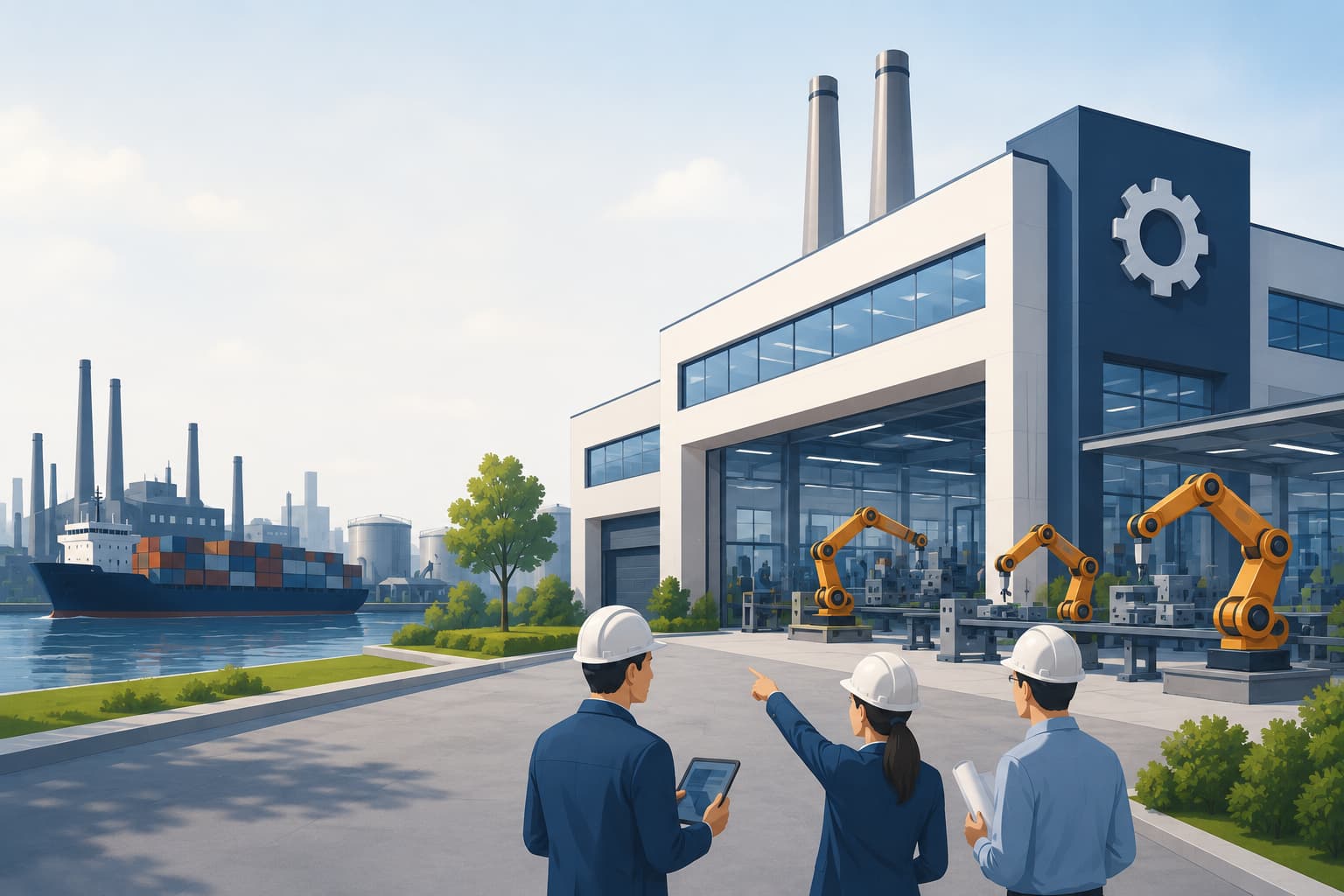
For three decades the story of manufacturing seemed to run in one direction only. Factories closed in wealthy nations and reopened in places with cheaper labor, global supply chains stretched ever thinner across oceans, and the logic of offshoring appeared unstoppable. Now that current has visibly reversed. Governments and companies across the developed world are pouring resources into bringing production back home, a movement known as reindustrialization or reshoring. It has become one of the defining economic themes of the moment, championed by politicians as a path to renewal and pursued by corporations rethinking where and how they make things. But behind the triumphant headlines lies a far more complicated reality, and understanding both the promise and the limits is essential to judging where this is really heading.
Why the tide turned
The shift did not happen for a single reason but because several forces converged to overturn the economics that decades of offshoring were built on. The most powerful catalyst was the pandemic, which served as a brutal wake-up call. When global trade seized up, companies that depended on distant suppliers, especially in China and Southeast Asia, suddenly faced crippling shortages and delays. What had looked like a smart cost-saving decision revealed itself as a dangerous vulnerability, and single-source dependencies on the other side of the world became a boardroom-level risk rather than a routine operational choice.
On top of that came geopolitics. Rising tension with China, war disrupting key routes, and a broader retreat from globalization pushed companies to prioritize security over pure efficiency. Trade policy then added fuel to the fire, as sweeping tariffs on imported goods changed the basic math: a company producing inside the market where it sells can sidestep tariff exposure entirely. Governments reinforced the trend with enormous subsidy programs designed to lure strategic industries home, most notably in semiconductors and clean energy. And a quieter factor has been technology itself, because advances in robotics and automation have narrowed the labor-cost gap that made offshoring so attractive in the first place. A modern, highly automated domestic plant can increasingly compete on cost with a low-wage factory abroad, minus the geopolitical risk.
The scale of the commitment
The numbers behind this movement are genuinely striking. Spending on the construction of new manufacturing facilities in the United States more than doubled over a few years, reaching record levels. Semiconductors led the charge, with hundreds of billions of dollars in private investment committed, the largest such wave in the country’s history, drawing not only domestic firms but the world’s leading chipmakers to build on American soil. A nation that recently produced none of the most advanced logic chips is now forecast to account for a substantial share of global output by the end of the decade.
The trend reaches well beyond chips. Electric-vehicle batteries, automotive production, defense, pharmaceuticals, and clean energy are all part of the homecoming, and federal announcements have pointed to enormous multi-year investment commitments across sectors. A new manufacturing geography is taking shape, with fresh industrial hubs rising across regions that had seen decades of decline. Surveys of executives confirm the momentum, showing the overwhelming majority now planning to bring supply chains closer to home. On paper, it looks like the most significant reversal in industrial strategy in a generation.
The awkward gap between announcements and reality
Yet here the story grows more complicated, and honesty demands acknowledging a large gap between pledges and results. For all the headline commitments, actual completed reshoring remains modest. One widely cited finding showed that while a large majority of executives said they planned to relocate supply chains closer to home, only a tiny fraction had actually finished doing so. Independent analysts examining construction and output data have concluded that while the manufacturing sector is clearly active, the evidence does not yet support calling it a genuine boom. Announcing an investment is easy and politically rewarding; pouring the concrete, installing the machinery, and reaching full production takes years, and many pledges may quietly shrink or vanish.
Even the pace that did build up appears to be cooling. Job creation tied to major government programs, which surged in the early years, has shown signs of losing steam more recently. And tariffs cut both ways: while they encourage domestic production, they also raise the cost of imported steel, aluminum, and components that domestic factories themselves rely on, and overall manufacturing employment has actually dipped as companies absorb these higher costs. The policy meant to revive industry can, in the short term, squeeze the very manufacturers it aims to help.
The myth of the returning jobs
Perhaps the most important reality check concerns employment, because the political appeal of reshoring rests heavily on the promise of bringing back good manufacturing jobs. Here the modern picture diverges sharply from nostalgia. The factories coming home are not the labor-intensive plants of the past. They are highly automated, run by robots, artificial intelligence, and a relatively small number of highly skilled technicians. The whole reason automation made reshoring viable is that it slashed the need for workers, which means a returning factory may bring far fewer jobs than the one that left, and the jobs it does create demand advanced technical skills that the available workforce often lacks.
This exposes one of reshoring’s central bottlenecks: a shortage of skilled labor. Alongside it sit other stubborn obstacles, including slow permitting, strained infrastructure, high energy costs, and the sheer expense of building at home. These frictions explain why so many companies, rather than fully reshoring, are choosing a middle path called nearshoring or friend-shoring, relocating production not all the way home but to nearby or allied countries. Mexico in particular has emerged as a major beneficiary, gaining share as companies shift out of China while keeping the advantages of proximity and lower costs.
A permanent shift, but not a simple one
So how should we judge this great homecoming? The most credible view is that it is real and significant but neither as fast, as complete, nor as job-rich as its most enthusiastic champions suggest. The forces driving it, the hunger for supply-chain security, geopolitical caution, tariffs, and subsidies, are structural and unlikely to reverse, which means some degree of reindustrialization is here to stay. But it will be selective, concentrating in strategically vital sectors like chips and defense rather than sweeping across the whole economy, and it will lean heavily on automation rather than mass employment.
There are also legitimate questions about whether aggressively relocating production is even wholly desirable. Pushing manufacturing home can raise prices for consumers, since domestic production is often more expensive than imports, and no advanced economy can realistically make everything itself. The consensus among careful analysts is that governments can influence supply chains but cannot dictate them, and that a mix of reshoring, nearshoring, and continued trade will define the future rather than a wholesale return to self-sufficiency.
The romantic image of shuttered factories roaring back to life and refilling with workers is powerful, but it belongs more to political speeches than to economic reality. What is actually unfolding is subtler and more interesting: a strategic, technology-driven, security-conscious rebalancing of where the world makes its most important things. It is a genuine turning point, just not the simple one the slogans promise, and the countries and companies that understand the difference will be the ones that navigate it best.